

How Artificial Intelligence Is Changing Our Everyday Lives
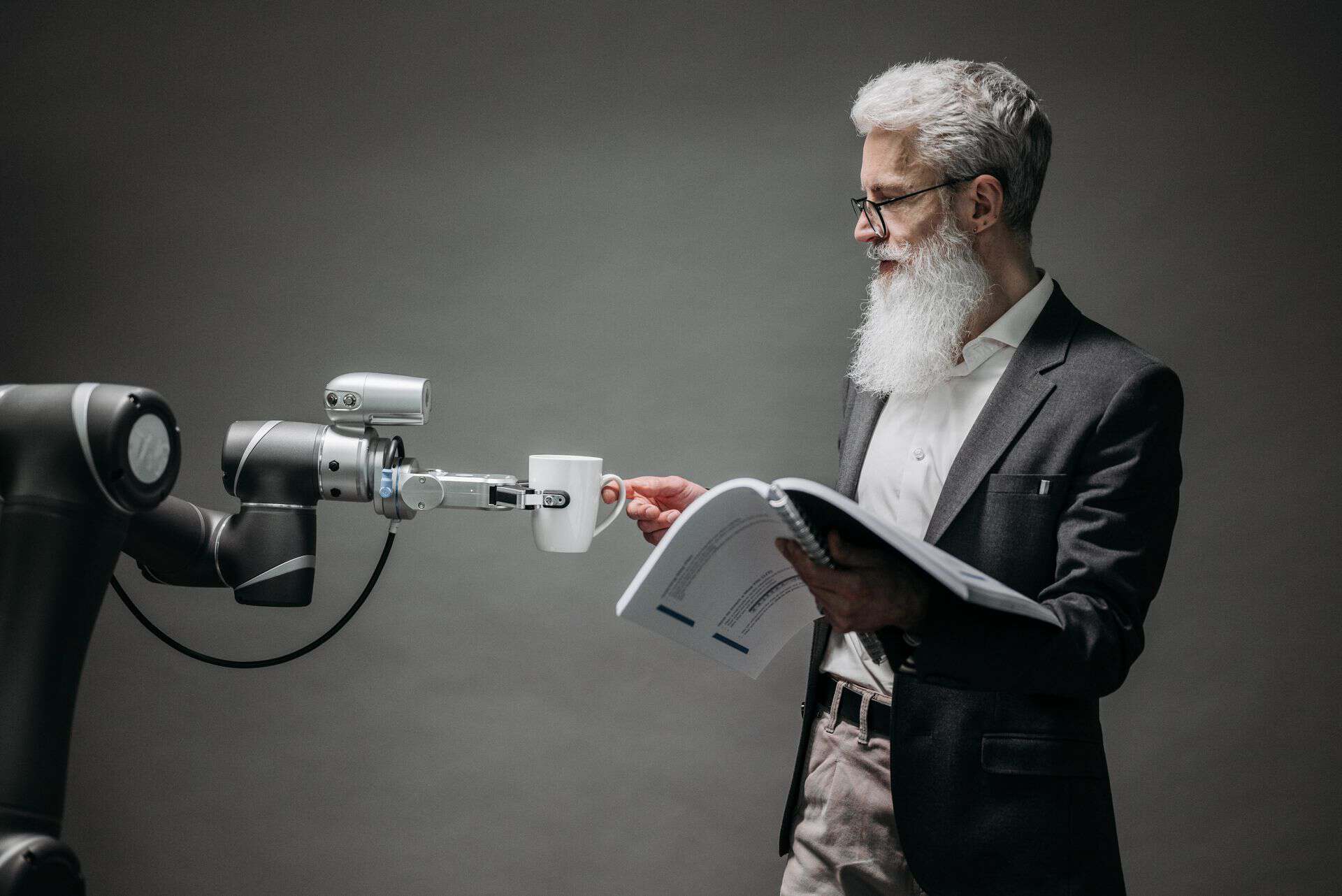
Artificial intelligence is no longer science fiction, but a part of everyday life. It can provide navigation directions, language translation, spam filtering and entertainment suggestions, and answer questions via digital assistant. AI is not something that many people notice, as it can operate seamlessly within familiar applications and services. As AI grows increasingly powerful, it is transforming the way we work, learn, shop, communicate and make decisions. The changes offer convenience, but they also pose key questions regarding privacy, fairness, and human judgment.
Communication and Information
Communication has been expedited and simplified by AI. Translation tools assist individuals in grasping the meaning of messages, websites and documents in various languages. Speech recognition enables people to speak to their devices, to control their devices, and to make notes without typing. AI suggests responses in email, identifies spam, and sorts emails.
AI is also used in search engines and virtual assistants to understand the question and answer it. Users are not limited to searching for specific keywords, but can ask questions in natural language. But, AI answers aren’t always correct. It is important for people to still check their important information, particularly health, financial, legal and current information.
Work and Productivity

AI can perform repetitive tasks and assist in decision-making in the workplace. It can summarize documents, write emails, analyze spreadsheets, plan meetings, or look for trends in customer information. Doctors, engineers, marketers, financial experts, and educators are all leveraging AI tools to streamline their workflows and navigate vast quantities of information.From doctors to engineers, marketers to financial experts, and educators, AI tools are being used to save time and sift through a wealth of information.
Not all jobs are being replaced by AI, but rather the way jobs are being done. Routine tasks can be automated and creative, communication, planning and judgment tasks will take more time for employees. Those who master the use of AI could find themselves at an edge but organisations need to also invest in training and make sure that automation does not take away responsibility. Human beings should still be accountable for key decisions, especially those relating to safety, employment and rights.
Education and Learning
AI is revolutionizing education with personalized learning experiences. Students can get customized practice questions with explanations, feedback and study-plans based on their progress. Language-learning applications can leverage AI to adapt teaching to errors, and teachers can utilize AI to pinpoint students in need of additional assistance.
They can enhance learning to be more flexible, but they cannot replace curiosity, discussion and the guidance given by the teachers. Students need to learn concepts through AI, not to create assignments. Clear policies on academic honesty, data protection and responsible technology use are necessary in schools as well.
Health and Wellbeing
AI has great potential in the healthcare sector. Medical images can be analyzed, patterns in patient records can be detected and doctors can be supported in diagnosing earlier with the help of algorithms. Wearable devices can monitor health metrics, such as heart rate, sleep patterns, activity levels, and more, and can be used to promote healthy behaviors.
AI can be used to improve mental health by providing meditation apps, mood tracking, and guided exercises. However, technology cannot be a substitute for professional care. A chatbot is not a trained clinician and cannot diagnose illness, nor can it fully appreciate a person’s context. Health information should be handled with great care to ensure it is not misused or discriminated against.
Shopping, Entertainment, and Daily Convenience
Recommendations are one way AI impacts daily decisions. The streaming services make movie and music suggestions, the online stores make recommendations, and the navigation apps forecast the traffic. Smart home devices can control lights, security cameras or listen to voice commands.

These features save time, but they also influence the content that people see and purchase. Recommendation systems can make recommendations by presenting similar content over and over. Personal data may be used in these services and consumers should be aware of this and check the privacy settings when applicable.
Using AI Responsibly
AI can be very advantageous but it is not apolitical. It may contain biases in data, be incorrect and be able to gather personal data. Responsible usage should be transparent, under human control, with robust privacy safeguards and knowledge of limitations. People should question who created a system, what data does it use and who is responsible for it if it fails.
AI is silently becoming a part of everyday life. If used appropriately it can alleviate burdens, enhance access to information and facilitate better decision making. When misused, it can perpetuate inequality or it can have a negative impact on critical thinking. The challenge is to experience its benefits, keeping human judgement, dignity and responsibility at the core.
